How to improve gum health naturally with Denta Guard’s practical routine
Healthy gums are the quiet foundation of a healthy mouth. This guide from the Denta Guard Research Team walks through what actually causes gum trouble, a simple daily routine that works, the foods and nutrients that help, and where an oral probiotic fits in — in plain language, with references you can check.
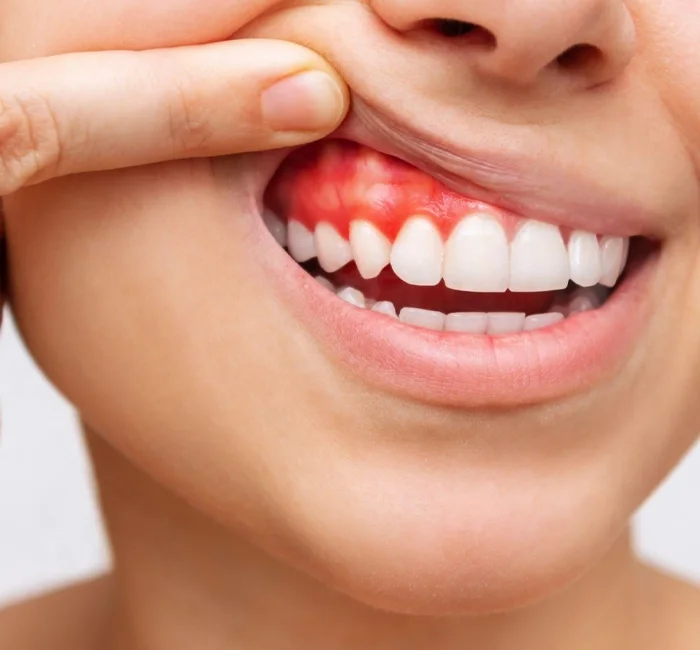
- Short version
- Most gum problems start with plaque and an unbalanced mix of bacteria at the gum line. Brush twice daily, clean between your teeth every day, eat more whole foods and fewer sugary snacks, and see your dentist regularly. Early irritation is often reversible; persistent bleeding needs professional care.
- Where Denta Guard fits
- Denta Guard is a peppermint oral probiotic tablet with prebiotic inulin, designed to support a balanced oral microbiome alongside — never instead of — brushing and flossing.
Why gum health matters more than most people think
It is easy to focus on teeth and forget the tissue that holds them in place. Yet the gums — the gingiva — are where a great deal of oral trouble begins. When the gum line stays inflamed for months or years, it can pull away from the teeth, form pockets that trap more bacteria, and gradually undermine the support around each tooth. The encouraging news is that the earliest stage of gum inflammation is one of the most reversible problems in the whole body, provided you catch it and act.
Gum inflammation also rarely stays a purely local matter. Researchers continue to study links between long-term gum disease and wider health, which is one more reason to take a little tenderness or bleeding seriously rather than brushing it off. You do not need a complicated regimen to protect your gums. You need a small set of habits done consistently — and an understanding of what you are actually fighting.
What actually causes gum problems
The central villain is dental plaque: a soft, sticky film of bacteria that constantly forms on teeth. When plaque is not removed, it hardens into tartar and irritates the gums, and the balance of species shifts toward the ones associated with inflammation. A cluster of everyday factors makes that shift more likely, and knowing them helps you target your effort.
| Trigger | Why it harms gums | What helps |
|---|---|---|
| Plaque build-up | Bacteria at the gum line release irritants that inflame tissue | Brush twice daily; clean between teeth |
| Frequent sugar & acid | Feeds harmful bacteria and erodes enamel | Fewer snacks; rinse with water |
| Smoking / vaping | Reduces blood flow and masks bleeding | Cutting down or quitting |
| Dry mouth | Less saliva means less natural cleansing | Hydrate; xylitol; check medications |
| Skipping cleanings | Tartar can only be removed professionally | Regular dental check-ups |
| Unbalanced oral flora | Fewer friendly bacteria to keep others in check | Prebiotics and oral probiotics |
Notice that most of the fixes are ordinary and inexpensive. The mouth is remarkably good at recovering when the constant pressure of plaque and sugar is eased.
A daily routine for healthier gums
Consistency beats intensity. A gentle routine you actually keep up will do far more than an aggressive one you abandon after a week. Here are the fundamentals, in order of impact.
Brushing that protects the gum line
Use a soft-bristled brush and angle it slightly toward the gum line, where plaque loves to gather. Brush for a full two minutes, twice a day, with gentle circular strokes rather than a hard back-and-forth scrub — scrubbing too hard can wear enamel and make gums recede. A fluoride toothpaste helps protect the teeth themselves. Replace your brush every three months or when the bristles splay.
Don’t skip cleaning between teeth
A brush cannot reach the surfaces between teeth, and that is exactly where gum inflammation often starts. Daily flossing, interdental brushes or a water flosser all work; the best tool is the one you will use every day. If your gums bleed a little when you begin, keep going gently — in most cases the bleeding settles within a couple of weeks as inflammation calms.
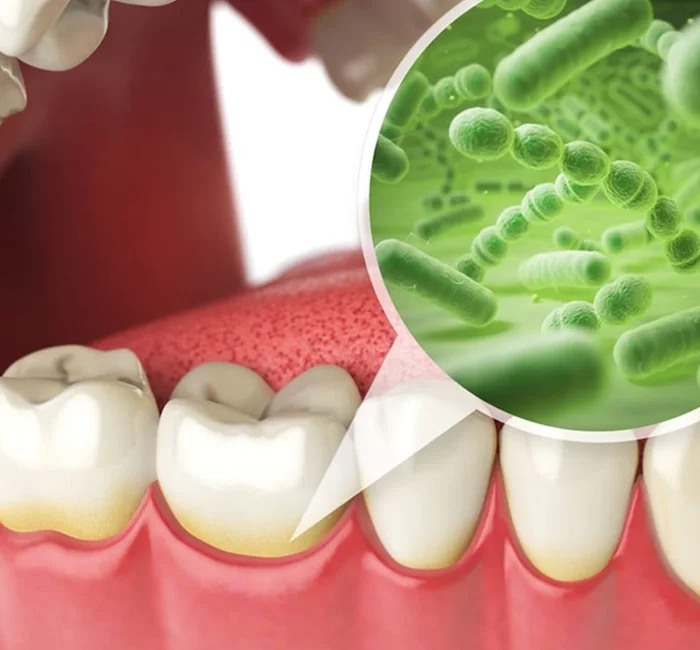
Finish with a rinse of plain water after meals when you cannot brush, and consider a tongue scraper — the back of the tongue harbours a surprising share of the bacteria behind both irritation and bad breath, which is why the same routine also gets rid of bad breath naturally. See how a daily Denta Guard tablet slots into this routine.
Foods and nutrients that support healthy gums
What you eat shapes both the tissue itself and the bacterial balance around it. Two dietary levers matter most: adding nutrients that gum tissue depends on, and cutting the frequent sugar that feeds the wrong microbes. Vitamin C is essential for the collagen that keeps gums firm, and in a population study of more than twelve thousand adults Nishida M and colleagues, “Dietary vitamin C and the risk for periodontal disease,” Journal of Periodontology (2000) found lower dietary vitamin C intake associated with a modestly higher risk of periodontal disease; omega-3 fats are studied for their role in a healthy inflammatory response; and crunchy, water-rich vegetables gently clean teeth while boosting saliva.
| Nutrient | Role for gums | Everyday sources |
|---|---|---|
| Vitamin C | Supports collagen and firm gum tissue | Peppers, citrus, kiwi, broccoli |
| Omega-3 fats | Studied for a balanced inflammatory response | Salmon, sardines, walnuts, flax |
| Polyphenols | Plant antioxidants; cranberry is traditional for the mouth | Berries, grapes, green tea |
| Fibre / prebiotics | Feeds beneficial bacteria (e.g. inulin) | Chicory, onion, garlic, oats |
| Water | Maintains saliva, the mouth’s natural rinse | Water; crunchy vegetables & fruit |

Where oral probiotics fit in
For decades, oral care has been about removal — scrub, rinse, kill. Oral probiotics come at it from the other side: instead of trying to sterilise the mouth, they aim to support a balanced community in which friendly bacteria keep the troublemakers in check. Certain strains, including Lactobacillus reuteri and Lactobacillus salivarius, are among those most studied for the mouth: an early double-blind trial by Krasse P and colleagues, “Decreased gum bleeding and reduced gingivitis by the probiotic Lactobacillus reuteri,” Swedish Dental Journal (2006) recorded less gum bleeding in volunteers with moderate gingivitis, and the later pooled analysis by Benavides-Reyes C and colleagues, “Clinical effects of probiotics on the treatment of gingivitis and periodontitis: a systematic review and meta-analysis,” BMC Oral Health (2025) found probiotics gave small additional improvements when added to standard dental care, while noting the trials were short and varied. Prebiotic fibres such as inulin act as food that helps beneficial bacteria establish — the mechanism reviewed by Slavin J, “Fiber and prebiotics: mechanisms and health benefits,” Nutrients (2013).
This is the thinking behind Denta Guard. Each peppermint tablet pairs a proprietary probiotic blend delivering 3.5 billion CFU with 100 mg of inulin from chicory root, plus cranberry, grape seed and carrot for antioxidant support — all in a tooth-friendly, xylitol-sweetened base. It is not a drug and it does not treat gum disease; it is a simple daily habit meant to sit alongside good brushing and flossing. Read our deeper guide to oral probiotics for how the strains and prebiotics work together.
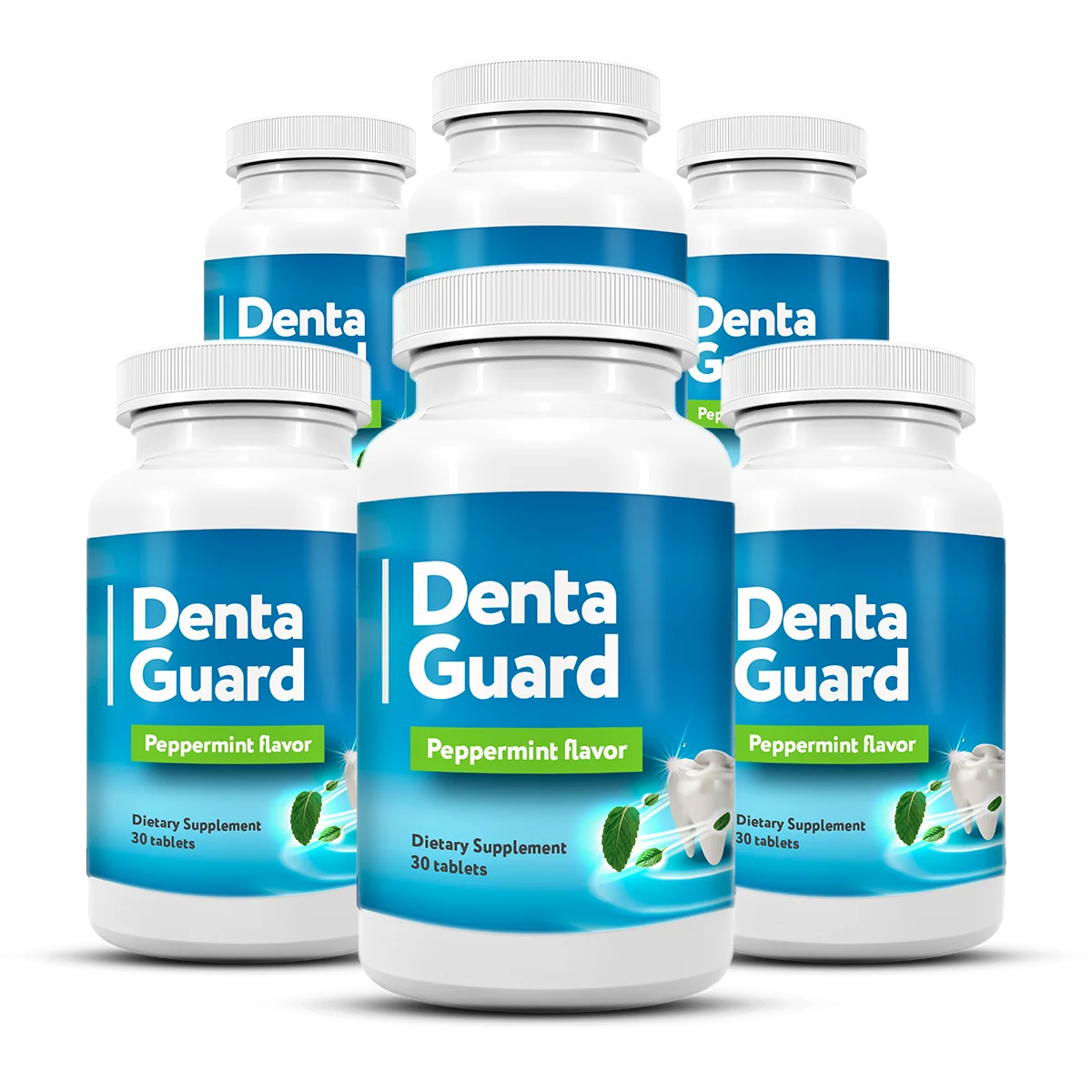
Support a balanced mouth, one minty tablet a day
Denta Guard combines beneficial cultures, prebiotic inulin and antioxidant botanicals in a peppermint tablet. The six-bottle bundle is the best value with free U.S. shipping and a 60-day guarantee.
Order Denta GuardWhen to see a dentist
Home care is powerful, but it has limits. Book a professional visit if you notice gums that bleed regularly, that have started to recede or pull away from the teeth, persistent bad breath, loose teeth, or pus and pain. Tartar, once formed, can only be removed with a professional cleaning, and established gum disease needs a dentist’s care. Think of at-home habits and a dentist’s expertise as partners, not alternatives.

Put it all together and the path to healthier gums is refreshingly ordinary: brush gently and well, clean between your teeth, eat more whole foods and less frequent sugar, stay hydrated, keep your check-ups — and, if you like the idea of supporting a balanced oral microbiome, add an oral probiotic like Denta Guard as an easy final step. Small habits, kept up, are what heal gums.
References
- Krasse P, Carlsson B, Dahl C, et al. Decreased gum bleeding and reduced gingivitis by the probiotic Lactobacillus reuteri. Swedish Dental Journal, 2006. Krasse P et al., “Decreased gum bleeding and reduced gingivitis by the probiotic Lactobacillus reuteri,” Swed Dent J (2006)
- Benavides-Reyes C, Cabello I, Magán-Fernández A, et al. Clinical effects of probiotics on the treatment of gingivitis and periodontitis: a systematic review and meta-analysis. BMC Oral Health, 2025. Benavides-Reyes C et al., “Clinical effects of probiotics on the treatment of gingivitis and periodontitis,” BMC Oral Health (2025)
- Nishida M, Grossi SG, Dunford RG, et al. Dietary vitamin C and the risk for periodontal disease. Journal of Periodontology, 2000. Nishida M et al., “Dietary vitamin C and the risk for periodontal disease,” J Periodontol (2000)
- Slavin J. Fiber and prebiotics: mechanisms and health benefits. Nutrients, 2013. Slavin J, “Fiber and prebiotics: mechanisms and health benefits,” Nutrients (2013)
- Riley P, Moore D, Ahmed F, et al. Xylitol-containing products for preventing dental caries in children and adults. Cochrane Database of Systematic Reviews, 2015. Riley P et al., “Xylitol-containing products for preventing dental caries in children and adults,” Cochrane Database Syst Rev (2015)
- National Institutes of Health, Office of Dietary Supplements. Vitamin C — Fact Sheet for Health Professionals. NIH Office of Dietary Supplements, “Vitamin C — Fact Sheet for Health Professionals”
- National Center for Complementary and Integrative Health. Probiotics: What You Need To Know. NCCIH, “Probiotics: What You Need To Know”
This article is for general information and is not a substitute for professional dental or medical advice.
Frequently asked questions
Can you reverse early gum problems at home?
Early gum irritation, known as gingivitis, is often reversible with consistent home care: brushing twice a day, cleaning between the teeth daily, and reducing the sugary, acidic snacks that feed harmful bacteria. Established gum disease (periodontitis) needs professional treatment, so see a dentist if bleeding, recession or bad breath persists.
How long does it take to improve gum health?
Many people notice less bleeding and puffiness within two to three weeks of consistent brushing and interdental cleaning, because gum tissue responds quickly once plaque is controlled. Deeper improvements build over months, and individual results vary.
Do oral probiotics help gum health?
The idea behind oral probiotics is to support a balanced community of bacteria in the mouth rather than trying to sterilise it. Strains such as Lactobacillus reuteri and Lactobacillus salivarius are among those studied for the mouth. Denta Guard pairs a probiotic blend with prebiotic inulin, but it is a supplement for oral wellness, not a treatment for gum disease.
Is bleeding when brushing normal?
Occasional light bleeding when you first improve your routine is common, but persistent bleeding is a sign of inflammation and should not be ignored. If gums bleed regularly for more than a week or two, book a dental check-up.
What foods are best for healthy gums?
Vitamin-C-rich produce, leafy greens, crunchy vegetables, fatty fish for omega-3s, and water-rich whole foods all support gum tissue and saliva flow. Limiting sugary and highly processed snacks matters just as much as what you add.
Does Denta Guard replace brushing and flossing?
No. Denta Guard is designed to complement good oral hygiene, not replace it. Brushing, cleaning between the teeth and regular dental visits remain the foundation; the peppermint tablet is an easy daily add-on. See the current packages here.